Late last year I wrote about Massey’s student’s association, and suggested that the governance structure was flawed, and that the organisation needs to be wound up and replaced with Massey delivering the services themselves or with other service providers. Plenty has happened with Te Tira Ahu Pae since then, and although I am aware of the internal struggles and political backstabbing that has been going on, I don’t have publicly verifiable information to present here and I will not reduce this blog to hearsay.
This is a shame though, because the story of Te Tira Ahu Pae’s first two years as an entity of that name is fascinating; it rivals Game of Thrones with its political intrigue and, as George R. R. Martin would likely agree, it’s even better because it is nonfiction. Martin has a love of history and I insist that what actually happened in our past is far more interesting than anything a single mind can conjure in the realm of fiction. Alas, it is not my story to tell; I wasn’t at the coal face of this institution’s demise.
All I can report is that my blog entry in September 2023 caused quite a stir among the power brokers of Te Tira Ahu Pae, especially the last lines where I mysteriously stated:
My intention with this statement was to write a sister piece describing the exact methods outlined in the Te Tira Ahu Pae constitution to wind it up from within. The method is plain to see if you have the requisite reading skills of an academic or a lawyer, and I decided against writing the instructions because it had a feeling of animosity in isolation, and frankly I became bored. My original write up was good enough, and the veiled threat of imminent destruction was more alluring when the method remained unrevealed.
I did, however, conduct the first step of the wind up plan; ask for written confirmation that I was a member of Te Tira Ahu Pae. This seems simple enough, but as the constitution was written it was not clear who was a member and who wasn’t, and only members could carry out the wind up procedure I had planned. Members are not predetermined in Societies; there is a member list which is consulted to determine who is and isn’t a member, so when my request was ignored I also requested to view the member list. I never got a response beyond acknowledgement of my request, despite calling and emailing a couple of times.
After this, I stopped pursuing this plan; it was distasteful and I was only starting the process for my own entertainment at this point. I think, to my error, I caused distress to some Te Tira Ahu Pae staff members when I asked to see the members list, and to that I am regretful. As a studier of institutions I see them like a machine with buttons and levers, and I saw a button I wanted to press, just to see what would happen. I didn’t know that Te Tira Ahu Pae didn’t have a membership list (technically I still don’t know that; they never got back to me. But the request must be honoured as per their own constitution so I now assume no one had asked before and they were not prepared to respond, probably because they didn’t have one). Not having one is an offense; it carries prison sentences, so I dropped my inquiry when I realised that I might be risking putting someone in prison for the evil motivation of doing harm because it is permitted for me to do so (an outrageous affront to my ethics; justice isn’t putting everyone in prison who is eligible).
After this my involvement stopped, and I returned to being a passive observer as a student of Massey. I think I started an internal struggle, though, because I heard through rumour that the constitution was being utilised in creative ways; ways that were inspired by the recipe I had threatened to detail in my original post. Sure, I never wrote the method publicly, but I did tell people about it verbally and pointed people in the right direction with my first write up. It’s not a secret formula; members can change the constitution with the right amount of proxy votes. I just needed (if I remember correctly) 50 members to give me full proxy voting rights and then call my own Special General Meeting using those proxies to then change the constitution (or enact the wind up procedure). To stop me, an opponent would have to get enough proxies or attendees to the meeting to vote against me (some of the changes needed a two thirds majority so it’s easier to stop the motion than pass it), but as there were only 27 votes to wind up the old ASA (the precursor to Te Tira Ahu Pae), if I got 50 proxies no one would be able to stop me – the student body is hugely apathetic to this organisation, and me getting 50 votes would be difficult but not impossible. The Board of Te Tira Ahu Pae can more easily carry out constitutional changes because they can call the meeting without 50 votes, but then they would still need to stack the meeting with enough allies to get things through; which is much easier for them because they can fail to advertise the meeting properly and literally two people might show up that they don’t directly invite. I might have some of these details wrong; I’m writing this from memory from my investigation a full year ago but the essence is correct.
Being on the outside, I don’t know what the changes were or who was bringing them about. So why do I bring this up now? Because my suggestion/threat is being carried out by the boss; Massey University has today announced that they will cease funding Te Tira Ahu Pae for services starting 2025. Massey cannot wind up Te Tira Ahu Pae, but now they will receive no income from next year, so naturally I ask again;
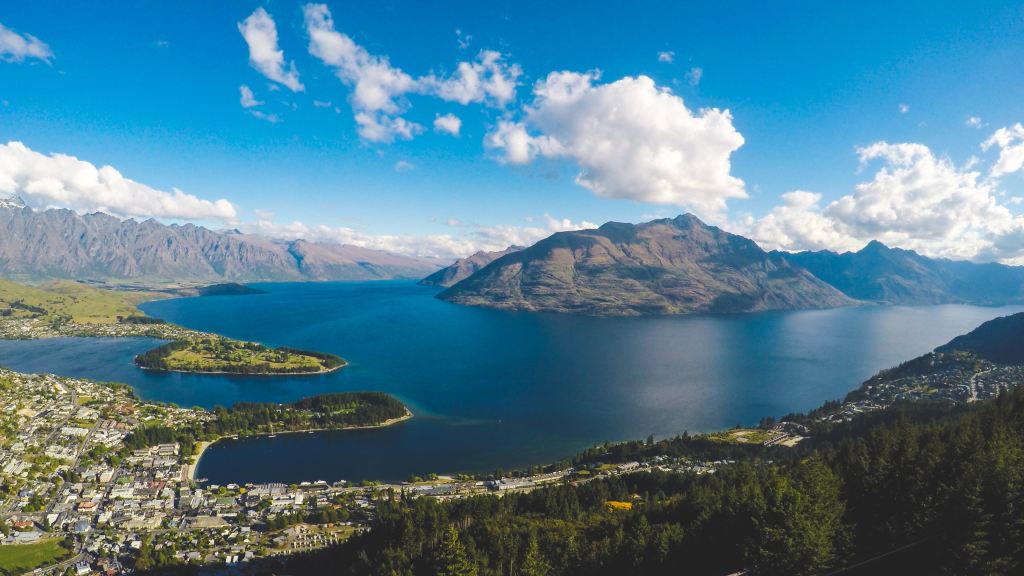
Across the sea and through a vast land we travelled to see the heart of another’s home. Our hosts asked of us two things: take no pictures, do not climb the rock. They had been here since creation to drink the water and to learn.
The Pakeha of this land had preceded me. I watched us take pictures of every facet. I learned how my people had climbed and when we summitted, like true Victorian conquerors we shit on the Red Rock itself poisoning the water below.
Yet Uluru stands in solemn and proud defiance with infinite and indominable mana. Restoration was already underway, but our behaviour had left its legacy. And I felt shame, for had I not learned in time I would have darkened the stain myself.
We sat still with the quiet sadness, and incensed, we felt the hot-blooded anger of a thousand thousand generations screaming for justice. But then we felt the timeless weight of Uluru’s presence: “I am not yours to heal, just as I was not yours to desecrate. Put your back to me and never return.”
We fled back to Aoraki where our colonial mistakes are less obvious and restoration is further along. Where our hosts have been partners for longer and where although there are still stains they are familiar to me.
Auckland Council asked for my feedback recently. I answered their questions, but I also had an agenda that I wanted them to know. On the last question I was asked is there anything else I wanted to mention. Here is my general feedback from my Auckland Council Feedback account, GolfBad:
“Rates should be calculated on a parcel’s highest and best use to deter land banking and inefficient uses of land. In particular, 53 Appleby Road, Albany, 0632 is an 82 hectare parcel of land that is used by a private golf course in the heart of Albany South. It has a rates valuation of $58,350,000 which includes $42,050,000 land value and $16,300,000 improvements value.
That parcel is four times larger than that of 360 Albany Highway (Kristen Private School) nearby, whose land value is $70,900,000 and improvements value is $59,335,000 totaling $130,235,000 Capital Value. The school has a rates discount, however its valuation fairly reflects the improvements that make this parcel at its highest and best use. The golf course is a massive parcel of undeveloped land, giving it a ratings valuation advantage as a land banker.
Were there medium density housing in that 80 hectare parcel the Capital Valuation could reach four times that of the school – suggesting $500,000,000 in Capital Value at highest and best use, ten times the current Capital Value. The golf course would then be forced to consider using the land at its highest and best use, and realise they could buy an equivalent 80 hectare parcel outside of the Auckland city limits with far less rates costs to continue the low value activity of golf. Developers could fit an entire inner city subdivision in the 53 Appleby Road parcel, which would have a greater value to Auckland.
If a fair highest and best use ratings valuation were used on this 53 Appleby Road parcel then the golf course could then request a rates discount from Council, which if granted would require Council to assess whether the golf course performs a service to the people of Auckland – perhaps allowing Council to apply requirements for a rates discount such as opening the course to the public as a park on Sundays or otherwise engaging with a wider range of the community (targeting demographics other than the typical golf user to achieve diversity Key Performance Indicators applied and measured by Council). The golf course would have to rethink its operations to better service the people of Auckland – or otherwise make enough revenue to cover the fair rates valuations.
If the parcel really is best suited as a golf course then the land owners will be able to afford the fair highest and best use ratings valuation. Applied across Auckland and you would see magnificent land use change towards a more equitable society. Remember Council can always offer rates discounts in exchange for KPI’s.”
Last week I observed two polarising attitudes towards work on the same day:
The first was in an office break room, which I share with academic staff and other professional office workers. This particular break room is far larger than necessary for the number of staff that use it, and I use it to look out the window during lunch. Today, however, there was a staff meeting occuring at one of the tables. This was surprising for two reasons; first, the six people including myself was the most staff I had seen in this 30 seat break room at one time, and second, the staff meeting felt confidential but was being held in a shared lunch space. I’m still learning how to work in an office, so many things that are normal seem weird to me, and one of those is holding meetings in the break room that aren’t open to any staff member wandering in. Perhaps this was a union meeting? Do unions have meetings in staff break rooms? These are the quirks of academic life that I have yet to figure out.
I wasn’t asked to leave, but the meeting goers had strained faces when I entered the break room. Still owning the ‘I’m new here’ pass that allows me to commit social faux pas on purpose, I sauntered in and sat down to stare out my favourite window. I need to test the waters to understand their depth, and so if these people were having a confidential meeting they would have to ask me to leave the… staff break room whose door was wide open and next to my office. They chose to continue their meeting but hastily tried to wrap it up now that there was a potential spy amongst them. What I observed from these strangers was a general negativity about working conditions, lead by a comment that there are only so many hours to get things done and our employer wants things done that take more hours than there are available. This sentiment was chorused and praised, and as this appeared to either be the parting word of this meeting or the summary, the group wrapped up their session. During their farewelling it was made clear by all of them that they were heading home for the day as the weather had packed up outside (they work inside, everyday). Remember that I was in there for lunch. I looked at the time: 3:20pm. There is no way staff at this office have worked an 8 hour shift by 3pm, I know because the car park is virtually empty at 9am. With that said, fair is fair; they might work from home as that is permitted here.
That same evening I had stopped by the supermarket on the way home and I made my second observance of workplace attitudes. The check out operator was a person I recognise from years of frequenting this supermarket – I don’t know them, and they definitely don’t know me, but I do feel some familiarity as they have been working here longer than anyone else. This person was a 60 or so year old woman, a pleasant and happy person who like any experienced checkout operator knows which customers to chat with and which to politely ignore. Sadly, I’m a customer who prefers to be ignored, and she realises this with great efficiency early in my checkout procedure, meaning she says hello (I respond of course) and then says nothing until the payment stage.
During this silent time the supermarket employee turns to her superviser and has a quick word, which I accidentally overhear:
“Should I work late this shift?” She asks.
The supervisor asks why, to which she replies “I showed up ten minutes late this morning, so I should stay ten minutes late tonight.”.
The supervisor, clearly not knowing that she had arrived late that morning, learns this information and affirms that if that’s the case she should work ten minutes longer tonight to make up for it. After self reporting her misdeeds, my operator happily continues her work. She did not appear upset at having to work every minute she is getting paid.
The checkout operator’s attitude to work is familiar to me, and I am still trying to understand and adjust to the salaried office worker’s attitudes. These office workers appear to be negative about their work, despite significantly higher pay and the ability to start and end work at leisurely paces plus without constant direct supervision. I don’t want to judge these workers, but I haven’t found a path to empathy just yet.
My personal experience with work is storied with casual, seasonal, fixed term and temporary contracts; I haven’t had a single permanent full time job in my first decade in the workforce, but I have worked a minimum of full time by spinning these plates simultaneously in my own little ‘gig economy’ that strafes across multiple industries. Being an agricultural contract worker who gets paid by a calculation of productivity for the week in a system that effectively puts you in competition with your colleagues was my first experience in the realm of full time work. This set my expectations for work that I have since carried forward as a cleaner, manufacturer, general labourer, painter, stopper, hammer hand, glazier, landscaper, machine operator, CAD drawer and accounts assistant. All of these roles have filled the gap between being a full time student for 6 of those ten years, and working as a teaching assistant at the University – my most consistent casual employment role over this time. Every work role has been met by me with the same attitude of that check out operator. I have always watched the academics and office workers at Universities, but I have never been one of them; I don’t have sick leave, I don’t have stable weekly work, and I can be fired with 24 hours notice without reason at any time, and that’s okay. I don’t generally complain unless I am in a meeting with salaried workers that I am effectively voluntarily attending, or if I get too many email inquiries that need responses during unpaid time – this happens with anyone in the ‘gig economy’ and is not unique to University teaching assistants. I have had builders ask me to attend a site evaluation without pay as it is a prerequirement to start work in earnest the next week – this is also true of inductions, interviews, catch ups with your boss and work socials. Salaried staff get paid for most of this, contractors do not. Whether this is legal is irrelevant; it is mine and others’ lived experience in this way of employment.
I will continue investigating the culture of salaried office workers, and try to conclude that I am not staring privilege in the face. That is too easy a conclusion to reach, and I pride myself on exercising empathy, so there must be a resolution to the differences in attitudes I have experienced.
In foundational economics textbooks and courses we teach students about the Barter economy, a theoretical system where transactions can occur without an accepted common currency. I was recently made aware that some students have either been taught or interpreted their teachings that the Barter economy is the chronological precursor to our modern market economy which uses fiat currency. I am not aware of a society that genuinely used the Barter system as their main form of economic transactions before adopting a common currency and moving to a market system, although this is not my expertise and I’m sure appropriately qualified anthropologists would know of some international examples. Instead, it is observed in both Māori and First Nations people of Australia that a Demand-Share or Gift economy was the dominant system of transactions before European colonial influences introduced formal currencies. Here I will explore the differences between these systems to highlight where their strengths lie and how the modern market economy has changed how we interact.
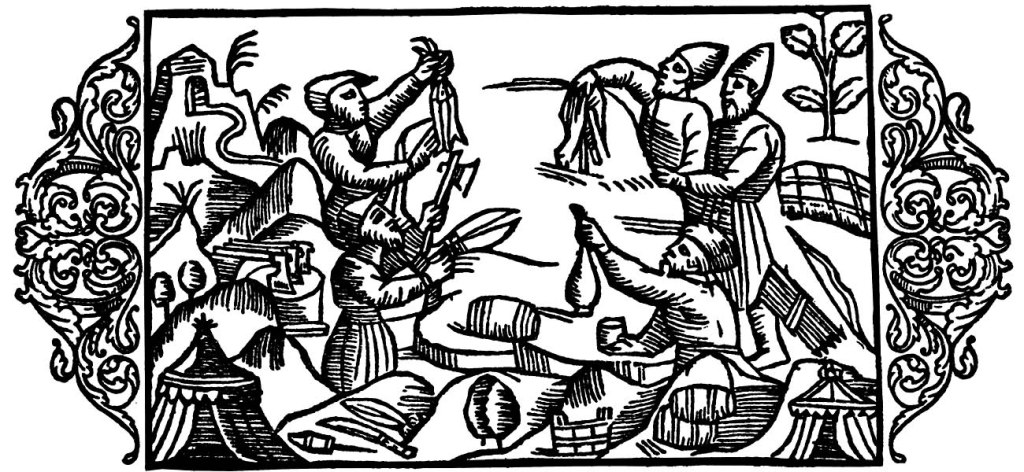
Olaus Magnus Historia om de nordiska folken. Bok 4 – Kapitel 5 – Om varubyte utan penningar. – Utgivningsår 1555.
We begin with the Barter economy, as there is a good reason why this system is described in econ 101 textbooks. To barter, two parties will swap things that they own between each other at agreed amounts. For this to be possible, both parties need to have something that the other person would like to have for themselves, which is the classical requirement of a ‘double coincidence of wants’. These people also need private ownership over these things, which is implied in most economic systems other than resources in common (communally owned). Swapping privately owned goods that have a double coincidence of wants is reasonably straight forward, although some haggling may be initiated by either party. Repeated interactions make the effort of bartering lower, as familiarity of your trading partner’s preferences help you plan your resources to facilitate a trade in the future. Bartering with complete strangers might often result in no trade taking place due to the restrictions involved in the double coincidence of wants. This problem can be further reduced by engaging in bartering transactions in a market of many barterers, as this would multiply the potential trades and dramatically increase the chances of acheiving the coincidence of wants necessary. With a large enough market, it is just a matter of informational processing, taking time and effort admittedly, to succeed in making everyone better off. These costs of completing transactions can sometimes be too steep to overcome, and in this instance the party would simply prefer to be self sufficient as much as practical. A party may consist of a family or village unit of people, where the resources within the party are communally owned.
Before continuing to the Gift and Demand-Share economies, I will note that communally owned resources within groups of people is a persistent method of resource allocation and transaction. Wherever there are few enough people that strong interpersonal relationships can form a communal ownership system is likely the most efficient method of transactions. Even in modern times a family unit almost universally utilises communal ownership within the family, as children are dependent on their parents anyway and cannot contribute in a self sufficient manner. While this is important to note, it is equally important to acknowledge that communal ownership struggles to expand beyond an amount of people that can no longer hold such strong interpersonal relationships. Lack of trust in strangers compels us to hold privately owned goods, and any economic system needs to take into account interactions with the wider community at the very least. The modern market economy makes transactions a very low trust environment, which enables people to transact with strangers from across the world without ever meeting or conversing.
The Gift economy, however, is similar to that of communal ownership in that it requires some level of informal social relationships to work efficiently. Gifting things to each other also functions quite happily within traditions of family or other communal units of people. They can also help with transactions between two distinct but still connected family units, perhaps like between two different hapu that share the use of some spaces. For gifting to work, there must be repeated interactions between the parties, which means like communal ownership this system cannot help with transactions between total strangers passing through. Gifting does not have an expectation of reciprocity directly, however a healthy gifting relationship should be a benefit to both parties over the long term if they are considered equals. Equal relationships would be between two hapu unless one is significantly better off and has a cultural obligation to share its relatively more plentiful resources. Gifting between unequals is typically unequal, in that the higher status party gives more to the lower status party. In this way there is a form of culturally enforced redistribution of resources in a progressive manner. Perhaps there is a system where the lesser party is expected to give more to the more plentiful party, however that would go against conventional norms in societies I am familiar with. This resource distribution is simple but effective: imagine the hapu next to the plentiful ocean gifting kai moana to their inland neighbours after a good catch with fish that will spoil quickly. A gifting process or gift exchange between groups of people may involve some ceremony, and certainly the gifts are given and received by people representing their respective wider communities for later communal or further gifting dispersion.
Demand Share economies are very similar to gifting, and might just be a variation of the latter. Where gifting might be interpreted as the giver choosing what resource they want to part with, demand sharing would be the recipient requesting what they need from the other party. The request occurs first and then the potential gifter chooses to accept or decline. They might not have what the demander needs, or they simply might not want to part with it. Either way, the potential giver has the right to refuse the request. However this is still a culturally enforced system, and a relatively high status person is harder to decline with regards to demand sharing. First Nations people of Australia often align with demand sharing, and understanding the cultural differences is important when interacting with people living the Right-way. Two First Nations people passing each other by in the Northern Territory far from any town might still utilise demand share to significantly reduce transaction costs and rapidly redistribute resources from one with plenty to one with little. In the desert there is little environmental forgiveness, so a sharing society developed to be hospitable to each other above all else is an important and useful cultural development.
Communal ownership, Gift economies and Demand Sharing are all acknowledged systems that both continue to happily exist today and were historically dominant in societies before common currency was introduced. Barter economies, on the other hand, are not historically dominant. Bartering has always been an option of trade between two complete strangers passing through, and remains a rare but sometimes viable transactive process.
Our modern market economy was introduced alongside sweeping technological and cultural changes. Some contend that the market economy caused everything from the 19th century onwards, others insist its only responsible for either the bad or good things depending on their agenda, whereas others still claim that markets coincidentally joined the multiple revolutions at the time. I suggest that the market economy was a necessary innovation to solve transactions where trust was low, whether because of eroding social institutions or massive increases in the number of people we can economically interact with. We can now economically interact with far more people than we can socially relate to, which necessitates a common currency to solve the double coincidence of wants and a lack of common cultural expectations or trust. The complexity of the modern market economy helps deliver fantastic benefits, however it has also removed visibility of how these benefits are created. It appears that those without an economics background struggle greatly with understanding why markets are useful to people because of their abstract nature.
Te Tira Ahu Pae is Massey University Student’s Association… or is it?
The current iteration of the Student’s Association of Massey University is in its first year of operations, and I suspect it is already unfit for purpose and perhaps never was.
The governance of Student’s Associations is complicated, and here we will explore the origins of these institutions, their relationship with the students they are supposed to represent and the Universities they operate alongside of (and later, under). We will find that the modern iteration of Massey’s Student’s Association, Te Tira Ahu Pae, is an entirely different organisation than that of its origins. My knowledge of Student’s Associations comes from my experience as a member of the Albany Student’s Association from 2014 to 2019, and as a current member of Te Tira Ahu Pae. With that noted, I will be limiting our investigation so that these two organisations are the setting. Research for the Albany Student’s Association was conducted using the now unavailable Annual Reports dating from its 1999 inception to its 2022 amalgamation (I had prudently saved copies before the ASA website was taken down).
To keep the focus on our modern legal settings, we begin with the end of compulsory unionism in New Zealand, which was enacted in 1991 (Employment Contracts Act). From this point workers were not compulsorily enrolled in their worker’s union, which meant union fees were now opt-in and voluntary. Student’s Associations, being a union of students, escaped this legislative change and remained able to require students to be fee paying members of their organisation. That is, until 1998 when the Education Act was amended to no longer require student membership in a student’s association. After 1998 Students Associations around the country were allowed to hold referendums and choose whether they continue with mandatory membership (and therefore mandatory fees), or move to voluntary membership (and an opt-in for fees). The Albany Student’s Association (ASA) was founded in 1999, the year which student referendums to choose voluntary or compulsory membership were first held. In its first year of operations the ASA convinced enough of its members to vote in favour of compulsory fees, thereby binding all future students to fees that would fund their organisation indefinitely.
The ASA was stable for a time, but in 2011 a further amendment to the Education Act moved all Student’s Associations to voluntary membership models regardless of student preferences. After twenty years of being the last compulsory union in New Zealand, the Student’s Associations were returned to the same requirements as the Tertiary Education Union and other worker’s unions around the country. Now they had to ask students to become members and pay fees out of pocket (previously the compulsory student’s associations fees could be paid for out of the Student Loan Scheme).
At this point we might expect the ASA to begin the difficult process of financially validating their organisation. Voluntary membership and opt-in fees force unions to prove and maintain their value proposition to their members. The Tertiary Education Union provides value in advocacy to many workers in Tertiary Education Institutions (like Massey University). Staff members pay their fees because of perceived value in membership, which includes employment law assistance, lobbying efforts and pay negotiations. Despite being heralded as the death sentence of Student’s Associations, this change could have moved the ASA to clarifying its value proposition and operate efficiently in the same way as for-profit organisations. At least, that is the intention of the amendment in spirit. We never saw this change in operations from the ASA, because rather than seek voluntary membership fees like every other union, Massey contracted the ASA’s services to students and paid them using the compulsory Student Levy (paid by all students of Massey also out of their student loan). In effect, the ASA continued to get the same funding but instead of directly coming from their student members, Massey University itself became the collector and transferrer of funds. Hardly the intention of the amendment, and ultimately causing the ASA to become independent contractors of the organisation that they work with on behalf of students.
This would be like the Tertiary Education Union suddenly being funded directly by the Universities themselves. If that bizarre event were to happen you would be right in criticizing the independence of the union. When union fees are now controlled by the employer rather than the employees, surely there is now a conflict of interest? I can’t find an example of a workers union being funded by the employer rather than the employee, yet in this instance that is effectively what happened post 2011 for the ASA. Since that point the ASA and its successor, Te Tira Ahu Pae, has been an independent contractor for Massey University to deliver services determined by Massey. These services are defined through the transparency requirements of the Student Services Levy that Massey charges to students for non-core services, however threading what is done by Te Tira Ahu Pae and what is done by other subcontractors is not possible with the information I have access to (Massey and Te Tira Ahu Pae does have this information themselves though).
The ASA became Te Tira Ahu Pae at the end of 2022 by amalgamating with 9 other Student’s Associations affiliated with Massey. Massey University has four campuses, and each campus had multiple associations representing different demographics of the student body. This amalgamation was passed through all ten Association’s Annual General Meetings simultaneously. The ASA’s Annual General Meeting that officiated the amalgamation and winding down of the original Association was held on the 19th of October, 2022, and involved 22-27 votes in favour and zero votes against (there were multiple motions to get the full amalgamation and wind down approved). Under 30 students represented the more than 3,000 Albany students enrolled that year to change the organisation over to Te Tira Ahu Pae, however I acknowledge student engagement has always been low on this campus and this poor turnout remains common, meaning the poor turnout is not reflective of disinterest or deceit in this particular AGM. Through this process, a new Constitution was adopted and the rules of the Association changed to reflect the new Incorporated Societies Act 2022, which is prudent and useful for students to have an updated entity.
This new Constitution details how student representation is to be achieved, and what the strategic priorities of Te Tira Ahu Pae is going forward. Remember that Te Tira Ahu Pae is a subcontractor for Massey University, therefore all of its funding is tied to services specified by the University and there is no expectation of negotiations. The power is asymmetric, and student representation is coincidentally a service required by Massey for Te Tira Ahu Pae to provide. To quote a publicly available website, “Te Tira Ahu Pae are fully accountable to students through the university“.
Knowing that Student’s Associations were once independently funded and could therefore represent student interests exclusively and are now funded through their respective universities is an important difference to note between Te Tira Ahu Pae and the origins of the ASA. Now, if the interests of Massey University are in conflict with the interests of the students it is not clear what Te Tira Ahu Pae will most faithfully represent. In fact, it is recorded on the ASA Special General Meeting mentioned previously on the 19th of October, 2022, that “Massey University requested the centralisation of services delivered by the 4 general student associations in 2021”. It was the University itself that forced the associations to amalgamate in the first place, and the amalgamation movement was not initiated by students. The push for amalgamation was spearheaded by the staff of the Associations; they knew where the funding was coming from and pushed forward their financiers objectives for amalgamation while making it look like a student initiative. I know that the process was democratically followed only in name; I was there in Albany during 2022 and no student understood what was being proposed.
Te Tira Ahu Pae proudly states on its website that they are “your student’s association at Massey University, run by students, for students !” and that they are “independent from the University”. Firstly, they are independent subcontractorsfor the University. Secondly, they are a registered charity and incorporated society, which might be considered a student’s association depending on your definition – if they represent the express interests of students I would agree that they are in fact a student’s association, however their interests are divided due to funding. And finally, are they run by students? It is this question we will now investigate.
The Tira Ahu Pae Constitution creates an organisational structure under the Incorporated Societies Act 2022 with some adjustments to make it a unique entity. At the top of the organisation in power is the Board, which are normally eight people, all of them students holding various important titles. Three Board members must be on the Board and are the three Presidents of the Tripartite system (General President, Mana Whakahaere and Pasifika President); the other five are effectively selected by these people out of other student officials such as a Vice-President (there are 4 to choose from), three Kaiwhakahaere (4 to choose from too) and a Pasifika Student Representative (also 4 to choose from). These eight members are the Board, and they get to choose who will replace them. The named titles above are not all elected positions: the three equally top President roles and all of the four Vice-President roles are appointed by… the Board itself. That doesn’t mean they appoint themselves, just that they appoint their replacements in an unelected manner. There are an additional 16 roles that are in fact elected by the relevant student body.
The top seven student positions in Te Tira Ahu Pae are not democratically elected. Half of the Board (the highest hierarchical body in the Association) is not democratically elected. Below the Board are staff members, who are also not elected of which there are four Manager positions who are employees to the Association. Below them there seems to be 30 additional staff (one role currently being vacant). Under one of the Managers, the Representation Manager, are all the student representatives, 23 in total of which 16 are elected by students. Of those 16, four of them are selected to be on the Board and have the highest power, but the rest are at the bottom of the hierarchy. If you look at the top twelve positions overall (4 Managers and 8 board members), only one third of them are elected and they are chosen by the Board themselves of which half of them are not elected at all! If this is getting confusing, note it took me some hours to understand their structure in full to get it even this concise (or unconcise). The point is that democratic representation of student voices is not being clearly prioritised by this organisational structure.
When I first heard about this structure as a student I just assumed that all student roles were elected. They didn’t hold an election in 2022 because the Association hadn’t been created yet, so I thought the first people in the role must have inherited their positions from their elected roles in the old associations that amalgamated. When I learned that three President titles and four Vice President titles were by appointment I was confused and had to Google whether these titles implied being elected. As it turns out the title of President and Vice-President does not necessarily imply an elected position, so that was my mistake, however I would suggest a more appropriate title would be CEO, Executive or simply Board member rather than President.
In any case, the statement that Te Tira Ahu Pae is run by students is not a lie; the Board is occupied entirely by students. Neither is the statement that Te Tira Ahu Pae is independent (subcontractors for) from Massey University. That Te Tira Ahu Pae operates in the interests of students is evident in their relevant service contracts with Massey University that they presumably succeed in delivering to the satisfaction of their client (the University). So yes, the new Students Association for Massey Students does what it says it does. But is it enough that it isn’t directly lying about its independence and student voice? Clearly it isn’t independent in the way students interpret the statement, and clearly the organisation is dominated by unelected officials and employed staff members.
I suggest that there are improvements to be implemented in the organisational structure of Te Tira Ahu Pae, and I further suggest that were Massey to wholly run the services that they contract Te Tira Ahu Pae for then student outcomes would improve.
To keep this short; the improvements I suggest all involve increasing student representation in the Association; restore elected positions to the top seven student roles, make student engagement in these elections a top priority, and place all of the student roles in a hierarchical position above the managers through sub committees.
I suggest that Massey could do a better job running the Associations services itself because Massey is a huge organisation with well functioning IT, HR and other support systems that can help the service delivery of student success. In a way Te Tira Ahu Pae has the worst of both worlds; it’s not independent in voice but it is independent in its inability to access the shared resources afforded large organisations. Why have a Students Association with no real independence but also be left out to dry? We can’t speak out against Massey using the existing organisation (I’ve never heard of Te Tira Ahu Pae move against Massey even a little, in fact they hold Barbeques during forums for the Stop the Cuts movement). Massey can subcontract the advocacy service to another third party (like the EAP system it currently uses for staff) while delivering clubs and societies, student magazines and sausage sizzles itself or with other more competitive subcontractors.
If it is best that Te Tira Ahu Pae winds up in its first year of operations, I would have to engineer that wind up procedure myself. I know how, and can do so alone, but that explanation will have to be for another time.
Colleagues in all levels of education have joined the chorus of parents expressing concerns about internet use by children. I understand it to be difficult to set device use boundaries with children at all ages, and the negotiation of these boundaries are tiresome for parents and teachers alike.
The cost of unmonitored, open access internet use for children is too high to give up on negotiating these boundaries. One argument for relaxed device use is to allow children privacy; they need a device with open internet access just as much as the right to close their bedroom door. I suggest that the parallels between a child’s need to develop with access to privacy and unmonitored internet use is flawed. In fact, children need to learn that all internet use is not private at all.
There are promising software products that filter internet use for children. The software also limits the controls of the device user (the child) and puts those controls in the hands of the gatekeeper (the caregiver). If a child is upset that their parents can read their messages, then they need to learn that far more sinister entities have access to their digital privacy than their parents.
The Kiwisaver scheme enrolls wage earners in New Zealand (currently voluntarily) into paying a percentage of their earnings into a fund that is managed on their behalf. The fund may only be accessed under specified conditions: Reaching 65 years old, buying a first home, dying or going bankrupt. The fund forces people to save their income over their life and use it later for later life needs.
The Government is currently being called on to remove permanent exotic forests from the New Zealand Emissions Trading Scheme. This is due to the sector’s lack of biodiversity, low employment and, more significantly, the strange outcome of land becoming unproductive over time while building a massive financial liability. The Government should not make any changes to the eligibility of the NZETS: permanent exotic forests do remove greenhouse gasses from the atmosphere and must be rewarded for that just like any other industry (in fact this industry will be the prime solution in the medium term due to its low cost). However, after 100 years the pine forests will no longer be absorbing carbon equivalent emissions and as a mature forest their harvestable timber will be far worse than the typically harvested 30 year old plantations. At this stage the carbon stored in the forest will be a financial liability: any land use change that cuts down those trees will incur a carbon emission cost just like any other eligible emitting activity.
I am concerned that after these many decades have passed the land has been productively exploited and is now unproductive and a liability. Companies who own this land have no incentive to change the land use as it will be too expensive. They may just abandon the land and leave the ‘clean up’ to the Government.
With this in mind I suggest a Kiwisaver applied to land parcels instead of people. A permanent exotic forest would have a charge added to its rates that would be a contribution to that parcel’s Landsaver account; a managed fund that can only be accessed under specified conditions by the land owner of the day. The specification for permanent exotic forest would be to convert the land into permanent native forest. The contributions would occur while the land is producing carbon credits for its owner but used for land remediation. This costs the Government nothing and will help with remediation costs of commercial property.
The same Landsaver scheme would be used for many commercial purposes that require remediation when the productive purpose is completed.
You could apply Landsaver to residential parcels as well, but the specified conditions would be activities that reduce emissions, improve biodiversity or support native ecosystems. This would be solar panel installations, improvements in energy efficiency of the home, native planting or perhaps water efficiency.
Landsaver, like Kiwisaver, would not be used for emergencies. A land owner would not use the fund for roof repairs, flood damage or other insurable events. If the residential Landsaver fund builds up over many decades without being used, the funds would fund end of life remediation of the building (demolition and dumping) as well as specified improvements in the new building.
The charges would be very low compared to existing rates (say one twentieth of current yearly rates) as it is an invested fund that would make returns and would often go untouched for decades.
Some tertiary students that I have taught express distaste for their learning institution because they find the courses easy. This lack of challenge makes these students lose pride of their accomplishments and even shame for achieving a degree that they don’t see recognition value in. I had the same attitude towards my studies whilst completing them, however I have now realised the obligation of celebration.
Most students find tertiary study difficult, and many know that their letter grade outcomes are more affected by unfair disadvantages due to life events or matters outside of their control. Some students do not achieve their goal of completing a degree. These students, when talking to a shameful yet successful student, may feel disrespected when an advantaged or gifted student does not uphold the respect that they hold for the desirable goal.
Whether you value your academic achievement or not, one should always uphold the dignity of the success out of respect to those who struggled greatly to get it, or struggled greatly and did not succeed under this metric. Students should attend their graduation ceremonies and parades with pride and pay respect to the advantages that afforded them this success as well as to the people that, for whatever reason, have not.
This obligation to celebrate successes valued by people other than the recipient is important beyond tertiary education; drivers licenses, child rearing, paid or fulfilling employment, or any other socially valued metric.
Tāmaki Makaurau is a large region of Te Ika-A-Māui and it holds a great many people of this country Aotearoa New Zealand. 2021 is not a year that is popular to discuss; it holds the collective memories of the Last Great Covid-19 Lockdown, and while I also prefer not to dwell on those times, we must look to that 2021 Spring to understand how the obedient people of Auckland became disillusioned with its Government and will likely vote them out in the coming October 2023 election.
As a reminder of the 2021 Covid context this was after we had eliminated the Alpha variant from our shores in 2020, hence winning our freedoms back and enjoying an awesome Summer, and was the year that the vaccine began rolling out (before 2021 any chance of a vaccine was remote). It is also the year that the more virulent Delta variant entered New Zealand, which caused the nationwide August (2021) lockdown. Although we didn’t know it at the time, the last day of this year would dictate the vibe of 2022: the first Omicron case emerged on New Years Eve.
Auckland, being the largest city and main international hub, was always prone to more cases of Covid than any other region. The spatial injustice is reasonably well understood however I won’t here go into the details of whether policies could improve this inequity. Criticising Covid policy is easy and mostly pointless or innappropriate with hindsight, and I greatfully acknowledge that the New Zealand Government made fantastic decisions under extreme uncertainty throughout the pandemic… until somewhere between the 16th of October and the 19th of November 2021. The events that unfolded during this time window is where the Auckland Separatist Movement began. This is a silent Movement, so silent that most Separatists are not even aware of their own involvement. We can, however, see evidence of the Movement’s effects in politics since its founding. I didn’t notice my own joining of the silent resentment until a full year later, when I saw the lasting consequences of Wellington’s decisions on Aucklander’s lives. Exploring the wage subsidies, vaccine mandates and vaccine passes are all complex policies that need their own space, and therefore we will focus on just the Spring 2021 lockdown here and leave the rest for another time.
I was reminded to write about my perspective of spending the Spring of 2021 in Auckland because we have, in the past few days, enjoyed some fine Spring weather now in 2023. We have left the cold of Winter and are enjoying warmer days, louder birdsong and a greening natural world. These changes have strong emotional effects on people, and enjoying them this year prompted me to reflect on what I observed in myself and my students last Spring (2022). It was the second half of semester, coming back for Week 7 in early September, when I personally felt unusually dismal about teaching. My lifelong passion is to teach, so I was quite surprised to find I wasn’t feeling enthusiastic to be going back into the classroom. Upon returning I found that my students were experiencing the same feelings. The mood was down, and no one wanted to learn anything in that second half. After a couple of weeks I realised that spending time learning in a classroom was not the problem; it was that we were sacrificing being outside and spending time socialising. The change in Season had brought an unusually high switch of attitude, like everyone around me hadn’t enjoyed the benefits of New Zealand Spring in… over two years!
The lockdown in question had five or so rule variations, and looking back they are confusing and complex. We started with Level 4: the most extreme where most people were not travelling outside of their home even for work. There were exceptions, and because Auckland had been through many rounds of these it seemed the work exemptions were becoming increasingly common. The timber merchant had to be open because some of their customers were essential, but they would therefore serve any customer using their exemption. In manufacturing it was a common joke in the industry that we are so interconnected that everyone is essential to at least one essential business somewhere down the line. Level 4 gave way to Level 3, which I still consider a lockdown as it upheld the most punishing parts of Level 4: no leaving the home for anything other than work and groceries. These two settings (with two additional adjustments to Level 3 throughout) would be held over the Auckland region for what ended up being 15 weeks. We started our lockdown in Winter and ended it in Summer. Throughout we were banned from in person socialising in any setting (with one hilarious exception that will be explored later) and were unable to enjoy the natural world. As with all lockdowns we were permitted a daily walk in our local suburb; this is not a substitute for normal city life.
Banality at its finest
In the Winter month, our first month of social hibernation, we were joined by the rest of the country three days later than ourselves. The last day of August moved the country down to Level 3 (back-to-work-but-not-to-play mode) while Auckland and Northland (who moved down just days later) remained at Level 4 (some-can’t-even-work mode). Even at this point we were in this together: my friends in Wellington and Christhurch complained of much the same problems at Level 3 as we had at Level 4. However the seeds of resentment began when on September 7th, when New Zealand moved to Level 2 and therefore effectively out of lockdown (work-play mode) but leaving Auckland in the most restrictive Level 4. At this stage we had been isolating for 22 days, a shorter stint than the original nationwide Level 4 lockdown of 2020 which eliminated the virus completely from the country. Comparing the Auckland situation with that of our Country was frustrating, but in these early days there was a feeling of martyrdom, that we were making a sacrifice for the good of New Zealand. We continued our isolation to protect the vulnerable and allow the rest of us to restart their new normal.
During this time there was also a race to vaccinate the population, and on the 16th of September we were given a goal: 90 percent elligible population vaccinated would be enough. We weren’t explicitly told that this new official target was the new lockdown release lever, however it was implied at this point that vaccination was our path forward in addition to elimination. This seemed like a new goal for the isolating Aucklanders to focus on: getting vaccinated might make this end sooner. We were allowed back to work but still without socialising on the 21st of September, marking a Level 4 stretch that matched the original 2020 lockdown. Still unreleased, the season had turned and Auckland was enjoying Spring weather but empty public spaces. It must be noted that it was never officially the 90 percent vaccination rate that would release Auckland from the lockdown, but it was certainly interpreted that way by some from the 16th September announcement. It was further alluded to in some more direct messaging on the 3rd and 4th of October, where the Prime Minister Jacinda Ardern announced a small region lockdown due to local cases and said “If we had a vaccination rate at 90 percent or above in either Hamilton or Raglan, it is highly unlikely that we would be here today announcing level 3 restrictions.“. The next day Ardern explained in a long announcement that vaccination rates are a key factor in lockdown settings. The announcement needs to be read in full here to really understand how explicit the 90 percent vaccination rate was being used as a target for ending the Auckland lockdown, but as a few key takeaways:
“…vaccines will be able to make an even bigger difference. They won’t be the only tool we need, but they will be able to act as a form of individual armour, which means we won’t have to rely solely on restrictions like alert level 3 or 4 to act as a barricade for us. But while we’re transitioning from our current strategy into a new way of doing things, we’re not there yet. We need more people fully vaccinated across more suburbs and more age groups.” PM Jacinda Ardern
On decreasing lockdown levels using the new adjusted settings “movement to each phase will be reviewed weekly. We’ll need to assess the impact of each before making further alterations, but ongoing increases to Auckland’s vaccination rates will also be essential to giving us confidence.” PM Jacinda Ardern
“…it’s great to see that vaccination rate still climbing up. We want to, obviously, see it over 90 percent.” Dr Ashley Bloomfield
In response to a question of whether an additional two months of Auckland lockdown will be required: “That’s the time frame for us to achieve our ambition around vaccination being higher than 90 percent double vaccinated, and then, of course, it’s another couple of weeks when people then have that full protection, full immunity. So this is the period of time, really, that we want to do that in. I’m sure, like everybody—particularly in Auckland—we’re looking forward to a summer where we can enjoy freedoms, and our ticket to that is vaccination. So the next four to eight weeks, into early December, is critical to get our vaccination rates up.” Dr Ashley Bloomfield
You might forgive me, then, when I watched that 4th October announcemnt live from my home and interpreted the policy to be a 90 percent vaccination rate in the eligible population as a requirement for the Auckland lockdown to end. Those who also misinterpreted this announcement were inducted in the silent Auckland Separatist Movement from this point.
Early October is also the point where Aucklanders were permitted to use public outdoor spaces provided they remained socially distant from everyone else and were in groups of ten or less people from two or less households and also socially distanced within their group the entire time. This concession was greatly appreciated, however it was distinctly uncomfortable to utilise. I only went to Long Bay beach on that first picnic-permitted weekend, and unfortunately the popularity of that beach meant an hour of searching for a park (private transport was recommended), and once there the people were either not socially distancing at all or were very grumpy. After so much time alone I, like many Aucklanders, stayed in my bubble and didn’t use the picnic concession very often. Auckland resentment levels rose again knowing that some people could now effectively evade lockdown restrictions, and only diligent rule follewers like me were still being quarantined.
With a new national number to obsess over our attention turned away from case numbers and towards vaccination rates. Auckland was a front runner immediately; we were the regions being punished for not being vaccinated and therefore had strong incentives (aversion to imprisonment) to get to 90 percent. At this time I misinterpreted the target again, possibly intentionally as I was now desperate to be free, and focused on the first dose rates initially. All three Auckland District Health Boards achieved first dose 90 percent on the 7th of November. It is from this date until our freedom in December that the resentment felt in Auckland became boiling hot. Driving was erratic even by Auckland standards, despair was replaced with the rage of a caged animal and we began a cultural witch hunt of the vaccine hesitant that continued for years afterwards, the price of which would be paid by society in obscure and surprising ways down the line. We achieved our double dose target on the 19th of November, but the 2nd of December was the first day out of lockdowns and into vaccine certificates, where vaccinated people were released from their isolation. The delay doesn’t seem too long, but every day of additional lockdown was worse than the last and extremely costly. Delaying 12 days, almost two weeks, from when we achieved the stated goal was too much for many Aucklanders. We had already obediently served for some 13 weeks and were asked to do two more without any target or goal to achieve.
I believe that the intention was to allow time for implementation of the vaccine pass system and give time for other regions to catch up their vaccinaton rates. The former reason is not enough to use emergency powers to isolate a city, and the latter switches the incentives so that those being punished are not in control of removing the punishment. What we do know is that keeping Auckland at Level 3 was not in the best interests of the public health of New Zealand. Prime Minister Jacinda Ardern is quoted on the 15th November as saying“…you will have heard me indicate today [is] that there is a strong view coming through from the Ministry of Health that we should consider moving to the protection framework earlier, because it provides greater protection for New Zealanders than we even see with the current alert level system.”. The new system was a better fit for purpose, and this was known to the Government on the 15th of November. It is therefore clear that the additional time spent in lockdown was an incentive to drive up vaccination rates; a punishment for all (Aucklanders) brought about by the few (South Islanders).
Aucklanders waiting for the South Island to get its vaccination rates up so we can visit them is absurd; those regions should have been placed in lockdown themselves until they obeyed and Auckland should have been free to travel to other vaccinated regions, handing over our pent up holiday demand money to fellow obedient cities. Instead we waited those extra 12 days (the regional border actually didn’t open for a further 13 days)) and then began the great punishment of the vaccine refusers.
The traffic light system that replaced lockdowns effectively freed everyone that could prove they did their part and took the vaccine. Those that didn’t remained excluded from many societal benefits. Looking into these effects must be reserved for another time, however it may be noted that a large protest occured in March the next year over these restrictions among other greivances related to Covid.
What has happened is now confined to the past. I have no interest in criticising every mistake made during the Covid response. It is only the additional November days of 2021 that Auckland spent in lockdown alone that I would like to highlight here, because this is the inflection point of public opinion in Auckland. We agreed to make sacrifices necessary for the health of New Zealand, and we agreed with the decisions made up until that month. The Government had grown comfortable with leaving Auckland in its new normal and did not fully appreciate the cost it was levying by delaying their decisions. Every individual day in lockdown is costly; the last more than the first. We felt betrayed after doing our duty, and our resentment of a distant Wellington bureaucracy roared into life.
From this point we see a fall in Government approval rates. In a 26th September ending poll 57% percent of responders thought NZ was heading in the right direction against 32% thinking the wrong direction. This favourable approval of NZ’s direction dropped over the next three polls to the point where a 19th December ending poll reversed the trend and had marginally more responders think New Zealand was heading in the wrong direction than in the right. The highs of that September 2021 poll has not been achieved since. This is clearly an imprecise metric for describing changes in attittudes, however the marked drop in favourable opinions about New Zealand’s direction was not seen during the 2020 Level 4 lockdowns; the polls held steady at a minimum of 70% thinking the right direction versus a maximum of 20% thinking the wrong direction. This is not an Auckland specific poll either, therefore I would contend that the change in favourability was more pronounced in the locked down Auckland region, and their responses would be weighing down the results of late 2021 and beyond.
Similarly we also see a reversal of the voting intentions of respondents over the Spring lockdowns. The same two dated polls from above reveal that pre Lockdown sentiment was 55% Labour party lead vs 39% National party lead preference and then after the Auckland lockdown had run ts course became 44% Labour party lead vs 50% National party lead preference. Political preferences can’t ever be boiled down to one issue so once again this metric is imprecise in its usefulness to my point, however the inflection can at least be observed here as well. Comparing this poll to the same period of the 2020 Level 4 lockdown we would have to look at this poll showing voting intentions for all parties rather than the above two party option. If we just look at the incumbent dominant governing Labour party intentions then our 2021 event shows a drop from 45.5% to 35.5%. The 2020 event shows Labour voting intention of respondents to be from 42.5% to 56.5%. Where the first large lockdown held an increase in voting intentions by 14%, the second Auckland only lockdown held a 10% fall.
This inflection point in attitudes is difficult to prove concisely, however I contend that the events of Spring 2021 are the precursor to an unfavourable election outcome for the incumbent Government. Aucklanders have not shaken their resentment, even if they have forgotten where it originated. We also later elected a Mayor who openly despises Wellington bureaucracy after an election campaign that included vitrually every candidate invariably speaking unfavourably about the central Government (see this great article here).
The Auckland Separatist Movement started in October 2021, and it will attempt to overturn this Government in October 2023. Mayor Wayne Brown is now the chief Auckland Separatist, and I wonder if the resentment continues to build will Aucklanders begin openly discussing a council driven reclamation of tax revenues? I write this here only to serve as a reminder of where exactly this resentment was born.







 Flynnteresting Thoughts